Saturday, 15 July 2017

Still Chancing Away, and FFF XVI, London.


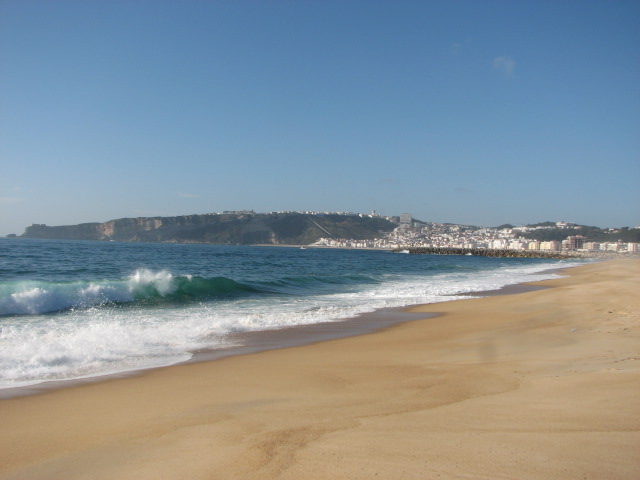
Nazare from beach near the Porto de Abrigo.
It's just as well this is a good place to be, because like most good places, things just doddle along at their own pace. Northerners who push their weight around are not likely to get on well, for all their complaints about lazy, corrupt etc locals. As I see it, they are neither particularly lazy nor corrupt, but they do tend to have a different approach to work and how things should be organised in general. We Europeans would do well to try to understand what is going on!
        At least when it boils down to English v Portuguese attitudes, I think one basic difference is that like most northerners the English more or less came to accept their state as a kind of church, which provides the basis for all legitimacy. Anything which bypasses state structures is therefore labelled as 'corrupt'. The Portuguese on the other hand are inclined to regard the state as more or less a necessary evil, especially when it comes to organising things that they think can be done better on the basis of personal relationships, be they within families or communities.
        Northern Europeans tend to divide all human activity into specialised units, that can all be regulated and taxed by the State. Actually Germany and France seem to be even worse than England in this respect. They call this 'efficiency' or something. Each little speciality has to have its exclusive qualifications. One ends up in a prison of regulations and taxes. As our French Sherkin Islander has it, 'En France ils sont tous en prison!' 
        It's a great pity when this attitude gets to be identified with the EU, because there is no good reason why it should be. We actually need to debunk the State somewhat. Subsidiarity is the answer, always taking decisions at the most basic level possible. However this can only work if the genuinely big decisions are taken well in hand at their appropriate level, in a way that certain well-known democracies have been failing dismally of late. Subsidiarity is the only way the ideal of democracy can be saved, grounded in personal responsibility at the level of communities where people actually know each other, but with effective overall direction. 
        The notion that democracy is achieved by the simple fact of being able to vote for one person or another through a ballot box, persons that one has no real relationship with nor means to hold accountable, is really little better than voodoo.
        Meanwhile this outfit where I am working in Nazare is a 'northerner's' nightmare. It is owned by the State, but is open and minimally regulated. Nonetheless, though somewhat tatty, it is liveable and it works. Well, eventually; we shall see! At least it is full of people 'doing their thing'; and how I enjoy the simple fact that fishermen, yachties and all sorts are dodging along together with very little friction or anxiety as far as I can see.  And they are mostly 'chancers' and Jacks of All Trades I should say!
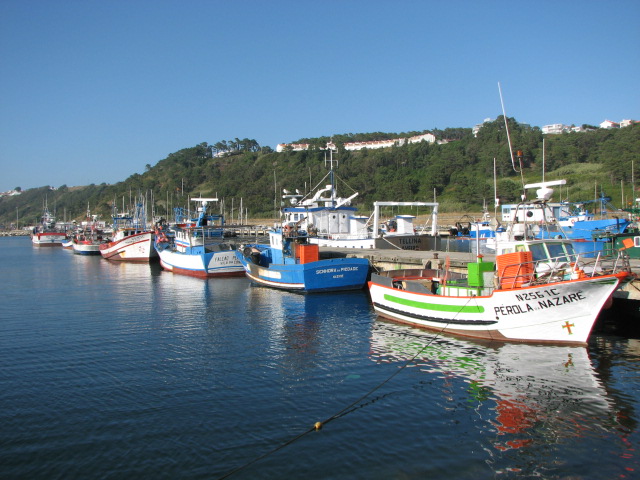
 
Netters


Trawlers
Boarding pots.


Someone's idea of room for the future?


From the Fractal Frontier, XVI, London.

Joy was teaching at the Lycée Française de Londres, and found me some supply teaching there. It was nice to be working in a sane environment, but nonetheless I decided that teaching was not my thing. I then got a job through a Slant/Cambridge friend at the Catholic publishing house, Sheed and Ward. I would mostly sit in a little office correcting proofs, with the odd bit of excitement when it came to discussing a book or writing blurbs. After a couple of months I moved on to a job as a reporter on the Catholic Herald, mostly in its office on Fleet St.

It was now summer, 1969. We (Fiona, Luke and I) had moved into a flat in Southwark, so in dry weather I would walk to work, past Waterloo Station and over the Thames on the walk-way beside the railway bridge, and so on along the Embankment. The gulls on the river put me in mind of the sea, before I plunged through a few more streets laced with diesel fumes, and found my desk in the office, smelling strongly of stale tobacco smoke. It is incredible to think now, how we used to work in a haze of the beastly stuff! Not that I didn't contribute myself; if you can't beat 'em, join 'em! But I did give it up a few years later, when I started to feel the effects of it on my chest.

Somehow or other I got to go to Northern Ireland, a day or two after the British Army was deployed on the streets there. Slant came up trumps again, and I had a contact in 'Free Derry', so I headed there and was duly given an arm-band to pass freely. One young Bernadette Devlin was in full flight, newly elected as an MP, and I got to listen in on the budding 'revolution', even to join in a little in their debates. It was heady stuff, and inspiring in its way. I went on to Belfast and to Protestant areas too, though that was scary. Merely being a young English reporter was suspect, and he certainly would not admit to working for a Catholic paper, not indeed that it was clear to me what they had to fear, on either count!

The truth was that they had a bad conscience. They knew, as well as everyone else who cared to acquaint themselves with the facts, that the Civil Rights marches had been savagely set upon, and the B Specials had been on the rampage with their Saracen armoured cars, shooting up the Catholic areas. I saw bullet marks right beside a school. The barricades had been thrown up in self-defence and terror. When the army was deployed, the troops were initially very welcome there, out of pure relief.

The great British public meanwhile were mainly getting the message that the Army was being deployed to subdue some rioting Republicans, but that it would only be necessary for a few weeks. Being thus misinformed, they did not have to bother with the underlying reality, though even to a green young man such as myself, it was obviously not true that the troops would be home again quickly. You may have thought that the Catholic Herald with its office in Fleet St was ideally placed to correct that view of things. Not so. By the time my copy had been cut, changed round and head-lined, it was unrecognisable, and in no way challenged the establishment narrative.

'What is truth?' asked Pontius Pilate, though the answer was standing right there before him. It is hard to know which is the most alarming: those who maintain that their own outlook, unexamined and unquestioned, in fact constitutes 'the truth', or those who in effect deny that there is any such thing! And yet we more or less expect this of our politicians, and go on voting for them anyway. But perhaps it is the Establishment media, the BBC, the New York or the Irish Times and so on, who are the more pernicious offenders, with all their claims of objectivity. Watch out whenever someone says, you can't say that!

That every perspective has its limits should go without saying, and that does not invalidate it; but let us 'own' it. Once we recognise and acknowledge it, we have the chance to examine it and modify it. Facts, especially physical ones, indeed make good starting points, provided one realises that there are different ways of looking at them. The more complicated the facts, the greater the need for reference points to validate them, for a narrative to interpret them. A society with no reference points, no shared narrative, is hardly a society at all; those who claim to do without them are simply in denial.

I say to the atheists of this world, who say they do not believe in God, well what about Truth, can you believe in that? If they say no, well then I might propose they go sailing the sea. But if they say they can, I shall ask how much do you believe in it? Would you be prepared to give your life for it? A question indeed that not any of us can altogether answer until we have to, but we might aspire to do so, or at least envisage such a possibility. But to die for an abstract concept? A poor fate! Can we really give ourselves to anything less than another person? How about the person who actually claimed to be 'the Truth'? He also claimed he would be with us till the end of time!

If journalism boils down to telling people what they want to hear, or what some powerful interests want them to hear, then the society it is informing is in dire trouble. You may say that this is just the human condition, but it remains true that some societies can take more of reality aboard than others, usually after periods of great suffering. When things have been reasonably ok for a long time, delusions are inclined to build up. It has taken longer than I expected for British society to find itself in serious trouble as a result of its gross delusions, but it is getting there!

Fiona and I both felt we did not want to rear a family in London, and I'm glad we did not have to. Fiona was left a few quid from her Granny that enabled us to buy a cottage in the country. It will be said we were just lucky; but we also remembered my mother's side of that old argument with Dad; if you put your faith in God, he does look after you!


Saturday, 8 July 2017

Wooden Boats in Nazare and FFF XV.

An old bit of Anna M's ribs.

They say that what the eye does not see, the heart does not grieve over. Well it's been a bit of a revelation to get the engine and fuel tanks out of the poor old Anna M, and thus to see the condition of some of those vital bits of wood that hold her together! But what with my physical presence and some dosh, Alec Lammas here in Nazaré is cranking into action. He's great, but one of those busy and imaginative types that one has to work at to keep them engaged!
Alec at his toils!

At least the conditions here are just about ideal, warm but not too hot, and with a fair amount of cloud cover. The boatyard is an open, easy-going place with a sense of community about it, and the living is easy. The principal activity around us is fixing wooden fishing boats, that seem to come here from all round the coast; I find this very congenial!

Interesting saw!
Sempre Com Deus!


Anna Legge is feeding us both on her vegetarian food with a budget of Eur50 a week, though this does not include the dry goods and booze already in the boat. It will be interesting to see how we get on with it, but so far so good!


From the Fractal Frontier, XV, Liverpool Days.


I was totally untrained and no doubt far from being a competent school-teacher myself, but Peter Harvey also worked at the Archbishop Whiteside School, and with Mrs Musker, a superb and highly experienced teacher who was the head mistress for the girls, fought a losing battle for change. The failure to see a way forward with those deprived lads was much bigger than our own. To have done so, one would have had to be able to envisage a future for them that neither involved ‘qualifications’ nor the dreams of football or rock-star glory. They could hardly all be Beatles!


Fiona and I had grappled with a similar problem at the Simon Community the summer before. It was one thing to get people off the streets and get a bit of reasonable food into them, but what then? We had briefly attempted a more sustainable kind of community, with Rory and a few of the less dysfunctional residents, trying to earn a living together by cleaning windows and what-not. We had learned quite a lot about the problems of addiction, also that we both needed to live in a place that was at least reasonably beautiful! But we did forge some wonderful and enduring relationships too, especially with the monks at St Mary’s, who had mostly been away studying when I had been at Downside.


Beyond our wrestling with the particular heritage of Dom Luke, these times could be said to have been generally defined by the controversy over Pope Paul’s encyclical Humanae Vitae, in which he reaffirmed the traditional teaching about artificial contraception. It had been first published while I was still at Cambridge, causing great upset in the Catholic chaplaincy there. Now, over a year later, the English version was published. I was with Father Sebastian protesting on the steps of Liverpool Cathedral, and as a ‘Catholic teacher’ on Radio Merseyside. Of course the media had a field day with it.


It was to be several years before I would admit that I had been largely wrong, when after three children Fiona and I found that contraception blighted our sexual relationship, and it also sunk in how right the Pope had been about its effects on society in general. Under the enthusiastic leadership of the West, artificial contraception has been preeminent in the destruction of traditional cultures and values throughout the world. However, there is no going back; we already realised that a truly catholic, that is universal, culture was meanwhile trying to be born, and we were trying to imagine it.


The Popes too have been working on it, as witnessed particularly in John-Paul II’s Theology of the Body, and more accessibly in Francis’ Amoris Laetitia. Even as D.H.Lawrence put it back in the '30s, 'the Popes know more about sex than an army of sex therapists.' The trouble is that the latter, in keeping with most modern culture and its way of compartmentalising reality, do not see much moral difference between the sexual act and, say, enjoying a bottle of fine wine together. The Popes on the other hand see it in its transcendental beauty, as God's gift to a couple within marriage; this is the union of two persons with immortal souls that can only be properly consummated in the love of God, by their being incorporated into Christ. Any lesser union can only be achieved with a loss of integrity. It is perhaps supremely by this realisation that married couples are brought to the knowledge of God.

Father Sebastian maintained that the new deal would have to be ‘flesh-assertive’. It had been too often forgotten that being celibate does not absolve one from the necessity of doing something with one's own sexuality. This however calls for a more acute actualisation of its transcendent possibilities, different to that of married people. How Sebastian was wrestling with it may be seen in the book that he wrote around this time, if my memory serves, that was called ‘No Exit’. Towards the end of his life he came out about his own homosexual proclivities, which I'm afraid complicated the situation even more for him.


Some of us meanwhile were fumbling around with projects to acquire a place in the country where we could further the ambition of developing a way of life outside the conditions of the ‘rat-race’. I came home one day and found a gang of the local lasses watching Fiona making a maternity dress. She was getting big, and soon the lads would be shouting up at our flat "Did the baby come yet?" We were sorry we could not do more for them! We thought of starting a community to help inner city kids, especially for those Scottie Road lads. The baby came, a son, and we called him Luke. There’s nothing quite like having a child for concentrating the mind! Fiona and I visited a large country house and grounds with Ken Hosie from the adventure playground and his new wife Angela, when Luke was ten days old. Some of the Downside ones were also interested, but the relationship with the mother house would have needed to be sorted out before that was going anywhere!

Our minds were also turning towards subsistence living, along with alternative and home education. I got a job on a building site while we tried to find a way ahead. I figured that the two basic necessities of life are shelter and food, and the more one can learn about them, the better. Along with that of the St Mary’s ones and the Hosies, we enjoyed the support of my brother-in-law Martin’s family over in Birkenhead. By no means all of the Irish immigrants to Merseyside had ended up in hopeless situations!


Martin’s parents had had little in the line of education or employment opportunities, intelligent though they were. Martin senior had had to spend years as a ticket inspector on the buses, but he was steady and good-humoured, and he and Mary had forged a warm family life. With the help of the Christian Brothers the children had thrived, and Martin junior went on to university, where he met my sister Joy, and a career as a geologist. We however weren't getting anywhere and became the 'rats leaving the sinking ship', again in Sebastian's words. We eventually went down to stay with Joy and Martin in Croydon, much appreciating their warm support, while I went looking for a job in London.

Sebastian I should say had been a huge influence and a very good friend to us. He was shortly to go off to embark on a career as a university chaplain in Boston, USA. He reckoned I would do better to go looking for a career in America, but I have to say that I'm glad I did not take him up on that one! He retired back to Downside and died there a couple of years ago, R.I.P.. The other four Downside monks at St Mary's all eventually left that monastery, all except Peter to get married; but you shall be hearing more of them!


Friday, 30 June 2017

Living in Hope, and FFF XIV.


"Unfortunately you fall just outside our criteria", said one crowd. Well when a society is run by people, notably bureaucrats and bankers, whose main principle is to watch the 'criteria' at their backs, then we may take it that society is on the way out. But with what can we replace them? Well, in the case of raising a few euro to repair the Anna M, a bit of family solidarity has happily done the business. Let's hope that when I get down to Nazaré next Tuesday, the other bit, actually getting the work done, falls into place as well! 

The precepts for human flourishing have been clearly laid out in theory - I mean faith, hope and love and all that goes with them - but how to live them out is of course another thing. How, for example, does ordinary day-to-day hope stand in relation to that transcendent hope promised by Christian faith? And how do we go about building real practical solidarity, even in our families?

For myself, ordinary human hope is like a spring-board. You have to jump firmly on it, and in fact go down with it, in order that you may take off with it into transcendent hope; in fact getting the Anna M to sea again is a pretty good little image for it. And indeed we need such little, practical, physical images, and you may be sure that any vibrant human culture is rich with them!

Sometimes the Church has concentrated too much on the hopelessness of life in this world, offering a transcendent hope more as consolation than as a fruit for our human strivings. Even when these appear vain, faith is trusting that they are never utterly lost. If we are to have a genuine faith in eternal life, it must come at the very pitch of our efforts here on Earth!

But not to mention the transcendent bit, ordinary human hope, and the beauties that go with it, was sadly lacking for the kids I briefly tried to teach in Liverpool, back in 1968. Read on! 

FFF XIV. The little segregated schools of four parishes had been amalgamated into the coeducational paragon, the Archbishop Whiteside Secondary Modern, but as yet only the new intake was integrated; the older boys and girls were still segregated. The headmaster was desperate for staff and seemed to be pleased with the new victim, in spite of the fact that he was totally green and with no training in teaching. BA Cantab was supposed to qualify me! He gave me the lowest stream of the last year boys for over half the timetable. He asked me what I could teach and I said that I supposed I could make some kind of fist of anything, except Maths. He gave me more Maths to teach than anything else. I also taught all the first year students French, for one class a week. Things were getting classy on the Scotland Road!
       The outfit was held together, in the sense of not descending into outright riot, by the deputy headmaster, a cynical thug. I have noticed that all weak bosses tend to have a hatchet man at their side! There was also a female deputy-head for the girls, breaking her heart at the chaos. She had been headmistress of one of the parish schools, and was that rare and precious thing, a good school-teacher. She stuck it for a lot longer than me, but didn’t last long there either. I find this reference on the internet to that school:- ‘I taught for a short while at Archbishop Whiteside RC Secondary on Silvester Street as a supply teacher in the early 1970s and the sense of failure permeating out of the place was almost tangible. However bright a child was, they had little chance of succeeding in such negative places.’*
       I was confronted with a place, a community, with no future, while its denizens had no hope unless it were to get out of it. Yet my lads were totally alienated from the whole idea of education. Many of them had elder brothers in borstal or prison. It was rare for any of them to go home to a square meal, though some Mums no doubt made heroic efforts. They were lucky if they were thrown a few bob for (fish and) chips. Chip butties (sandwiches) or jam ones, with grotty sliced bread of course, was what a lot of them seemed to live on. Since I taught them both Maths and English, I made valiant attempts to get them to do simple arithmetic and to write. What could I get them to write? I managed to get permission to take parties of them down to the docks, and tried to get them to write about what they saw, and whatever images it provoked.
        I undertook to produce a school newspaper, and this was thought very bright. In a moment of naive folly, I got some of the more articulate to write down what they thought of the transition from the parish schools to the new one. Of course they were brutally damning, with their sharp Liverpool wit and some surprising perspicacity. I printed much of what they wrote, and that was the end of my career there. I spent more and more time playing football with the lads. This was the one thing that fired them up; they were transformed when kicking a ball around. They knew very well they were trapped, and the dream of making it as a footballer was about the only escape they could imagine.
       The way the end came for me was rather amusing. What to do with the French classes was a good question. The curriculum was absurdly inappropriate. If I could just give them some idea of France, and teach them to say s’il vous plait  and merci, I thought I would be doing well. It was uphill. Towards the end of one class, when I was failing dismally to get answers to questions like ‘ou est Paris?’, I said in desperation ‘Right, you ask me questions!’ This deteriorated rapidly into ‘Sir, where do babies come from?’ In my naivety, I said, ‘don’t you know?’, and gave them a brief account. Rapt attention! But next morning I had the headmaster on to me. ‘Mr Aston, I hear you were giving sex education in French class?’
       The previous summer, while fixing the roof of the Simon house in Shaw St, I had fallen in with an alcoholic Paddy by the name of Rory Dunbar. Rory had grown up at the foot of the Dublin mountains, which might as well have been in the wilds of Donegal in those days, before Tallaght came sprawling out to meet it. When he was young there had been no electricity there, water was drawn from a pump and turf for burning from the hills. Modernity Dublin-style had soon swept away that way of life, but I suppose Rory had never quite been able to adapt. We became friends, and down the years to come Rory taught both Fiona and I many basic survival skills, helping us to come down to earth.
He also fostered our interest in Ireland, in my case much aroused by the very good Irish school-friends I already had, especially Ken and Rodney. It was another few years before I actually got around to even visiting Ireland with him, and we'll come to that later, but here in Horseshoe Cottage right now a great friendship lives on that he initiated, with the Pye family. Rory used to help Patrick Pye to lead stain glass windows, up the road in Piperstown, looking down across Dublin from the hills above Tallaght.
I like to think that something special has occurred, what with Ken's and Patrick's art, and Rodney's eremitical life, and perhaps even my own poor scribblings, that one day might be recognised as a glimmer of a new dawn of Irish Catholic culture. Poor Patrick, an artist and devotee of beauty if ever there was one, is temporarily in a care home right now, but here having a bit of respite from looking after him is his wife Nóirín, a lady of real hope! -

Nóirín Pye.


Saturday, 24 June 2017

A Matter of Credit, and FFF XIII.


When I was a very young man, I walked into a bank and got a whopping overdraft with ease. Whether it is the times, or my age, or the struggling life that I have led bringing up a family of nine in the West of Ireland, deliberately turning my back on a privileged English background - whatever - the fact is in recent years it has been impossible for me. However, needs must try, if the old Anna M is to get back in the water; and blow me, I have after all found signs of life in the Bank of Ireland. Is it possible that we did get something of value in return from the Duckie's Commerce Secretary, Mr Wilbur Ross, as he doddled off with his Eur500million profit from his investment in our bank?* It still remains to be seen if the bank will come good with a piddling loan for me! 
       There is a presumption among the powers that be that our future depends on the big players, the kind of guys that the Duckie has in his Administration, with which of course our Irish Government coyly concurs, even as, like the English Tories, they pay lip service to equality and social justice. One might be tempted to consider that we need a new French Revolution, which would involve chopping a lot of heads off! But the weeds only spring up again, as we see now so clearly in the 'home of democracy'! 
       I think that no matter what system one has, its success or failure in real terms depends on listening to and empowering all those who stand outside of the magic circles of power, whether these circles consist of members of 'The Party' or simply those who have access to credit. In the end, an economy depends on those who actually rear families and both produce and consume goods or services, because they must, along indeed with those who facilitate them by trade or finance. Which way should the communication should 'face'! If you are interested in how this kind of thinking worked out in my life, read the despatches From the Fractal Frontier in the small print at the bottom of my posts.

*http://www.thejournal.ie/wilbur-ross-trump-bank-of-ireland-2-3103430-Nov2016/

Summer in Sherkin.


FFF XIII. I finished the degree in Cambridge, after a fashion. My cavalier attitude must have been frustrating for my teachers, and I must say they were kind. There had been moves to get me to see a psychiatrist, however, which I did not appreciate.  Meanwhile there was a kind of gathering going on in Liverpool, and Fiona and I headed back there. Sebastian was now the parish priest at St Mary’s, and as well as Christopher, there were Peter, Kevin and Anselm in the parochial house, while Rodney and Ken Thompson and John Stokes were living in a flat in Liverpool 8.
       As for what each of us expected to come of it all, it is impossible to speak for any but myself. Anyway Ken got a  job helping to tidy up the church-yard around the Anglican cathedral. There were some broken down graves in it that needed mending. Next thing, he had the bath-room of the flat he shared with Rodney and John covered in stone-dust, as he chipped away there at blocks of stone. He at least had found his vocation! Rodney was to become a hermit in a wild Connemara cottage, while John became a priest of the Westminster archdiocese. Meanwhile some of us were thinking of trying to establish some kind of sixth-form college, to give it possibly too grand a name. Perhaps it could be done at Downside, perhaps we could get some other house, where youngsters from all social backgrounds would be able to spend a year completely free of exam pressure, studying essentially on the basis of Dom Luke's course, with a view to figuring out what to do with their lives, and what life in general was all about.
       St Mary’s, Highfield St, near the Exchange Station and at the back of the docks, was a Downside parish and I suppose a testimony of the monks’ desire to break away from the ‘best gentlemen's’ club west of London’ aspect of the mother house. The first Catholic chapel thereabouts was built around 1726, but destroyed by an anti-Catholic mob 20 years later. The next chapel was disguised as a warehouse. Into this area, many refugees from the Irish famines were to pour, arriving packed into dodgy craft even as refugees elsewhere do today. A fine Pugin church was nonetheless built around that time, only to be destroyed by German bombs in WWII. The church where Fiona and I were married had been opened in 1953. By 1968 the rows of tenement houses had been replaced by soulless blocks of flats. N'ere a tree survived in that urban desert. The whole area was eventually flattened, mainly to make way for flyovers and whatnot as far as I have made out, while the church was closed in 2001 and demolished in 2003.
       The role of physical place in our lives is a mysterious business, and of course goes with the whole business of ‘roots’. It is hard to know how much credence to give to the notion that the Celtic side of the British Isles functions as a kind of foil to the Germanic, Anglo-Saxon side; a semi-suppressed underside wherein lurk subconscious and imaginative resources that the brittle, disciplined superstructure of the Sassenach ignores, to his own impoverishment and peril. The Mendip hills, upon which Downside stands, would constitute part of the frontier between them, if such a thing can be said to persist nowadays.
       The Anglo-Saxons are supposed to have barely penetrated the Somerset marshes beyond them, where stands the Celtic stronghold of Glastonbury. At the southern end of this border country was my mother's home country in the Isle of Purbeck and the marshy levels about the River Frome, at the back of Poole harbour in Dorset. Here was another Celtic outpost, and subsequently recusant refuge, until Corfe Castle was destroyed by Cromwell. Her family evidently attracted recruits from distant Celtic parts, for one of my mother's grannies was an Irish Catholic from Co. Monaghan, and the other a Highland Scottish one.
       But the beautiful West Country seemed very far away in the urban jungle behind the Liverpool docks, and indeed what the bashed-up Irish who lived there were to make of the priests with posh accents is anybody's guess. As one looked down from the heights of Everton, across a waste of chaos, remnants of old streets with their rows of grim back-to-back Victorian housing, swathes of empty spaces where they had been demolished but not as yet replaced by anything, corner pubs or other slightly distinguished buildings that had as yet been spared, tower blocks of new-grim flats, various industrial buildings down nearer the docks, some cranes and ships, the Mersey - only then, in the distance on a clear day, would the hills and mountains of North Wales remind one of that other world where Nature retains her dignity and beauty. And at night the odd ship’s hooter reminded me of the sea!  
       Was it possible for those hungry 19th century Irish eyes to glimpse those Welsh hills occasionally, above or between the slate roofs, through the smoke of many chimneys? Did they pause to wonder, like me,  whether the Mountains of Dublin or of Mourne might be spied from them? Did they think then of the grand and graceful places that they had been forced to abandon? And what of the gulf between their heritage and ours! Was it really possible that the Catholic Faith could transcend it? To be middle class might be defined as having a fair chunk of hope in terms of this life; to be poor is to have to face 'a vale of tears' in which you must locate your hope firmly elsewhere, in Heaven, (unless in some alternative, 'the Revolution', or whatnot); can they be reconciled? Going to Liverpool from Downside was certainly some kind of a statement, but of what?
Was it a matter of trying to reconcile beauty with ugliness, or our fine aspirations with the reality of post-industrial Britain, or Celt with Saxon, or rich and poor, or hope for this world and for the next? Or all of them and more? We were still working on it, but the fact that the situation remained unresolved in that lump of a place on the Mendip Hills, which is Downside, did not help us to find our way. Meanwhile I don't think our monks' sermons found many hearers in the tenements; suitable ears would have to belong to workers in the nearby city centre or to blow-ins like me. Fiona and I moved into the parish youth leader’s flat, over a chipper across the square from the church. I can still smell that horrible smell of rancid cooking oil that wafted up from below. The cops only ventured into that area on foot in threes, and were lucky if they were not hit by the odd bottle whistling down from the surrounding tenements. I found a job in the new ‘secondary modern’ school that was attached to the parish of St Mary’s, but that's a story for the next post.

Saturday, 17 June 2017

FFF XII

Summer has finally arrived in Ireland, and to prove it I even went for a swim yesterday in Horseshoe Bay. With fine weather came a tribe of grandchildren, so
there's not much time for writing; but there's not much to blog about anyway. What is there to say about contented times? I have been meanwhile doing little jobs about the house, while also trying to put money together for the job below in Nazare on 'Anna M'.
There's no wriggling out of the for better or for worse bit in the case of boat-ownership. If your boat is crocked you must try to fix it, and quickly. Boats die if they are neglected. Well now, of the hundreds of people who have sailed aboard Anna M, and even those who just might like the idea of doing so, surely there are some who can afford a few euro to help fix her up? You have the chance of a week's sailing aboard this autumn on the Algarve. Please see last week's blog.... Meanwhile, Anna Legge seems to be taking to life with the Anna M, despite the difficulties. I am hoping she will do some of the things I havn't time for, like driving the Facebook page.


ps - very sorry to hear about the fires in Portugal. Is this our future?


I continue with my account of a life On the Fractal Frontier....


FFF XII I have occasionally encountered strangers in conversation who assumed that my convictions were the result of ‘successful brainwashing’. I hope that I have shown that this is far from the truth, unless one means something very different by the term ‘brainwashing’ to what they meant. They tend to imagine that any faith-based education must be in the line of those madrasas wherein the Saudis for instance indoctrinate vulnerable young men, having them for a start learn off the Qur'an by rote. While we Catholics are capable of understanding that there may be a more positive side to all that than the West appreciates, and that we may even possibly have something to learn from it, nonetheless since Vatican II the lesson has been well learned that faith is a pilgrimage that everyone has to make for themselves, in their own time; besides, Christ himself asserted that, beyond what he tried to convey in his earthly life, that which Holy Scripture reveals, we still have much to learn in the course of the journey. It is the Christian doctrine of the Trinity that enables us to move beyond the notion of a static deity, whose self-revelation has been fixed once and for all; instead we are introduced into a divine community, a nexus of dynamic relationship.
Unquestioned assumptions and unexamined lives are that which may lead one to suspect real brain-washing; victims will refuse to engage when questioned, possibly announcing that 'they are offended!' 'Hallo, yes, sorry about that, but so what?' I am tempted to reply. There seems to be a fierce outbreak of 'offence' these days! Meanwhile our minds tend to be so battered, cluttered and mired in ‘stuff’ that we all actually stand in need of a real brainwash now and again. Perhaps that's been the most important function of sailing in my life. Certainly it was a very positive counter-balance to all that education, when I was growing up. The whole business seemed to have been far too cerebral.
Yet one has to watch out. As privileged members of the ‘affluent society’, we are good at compensating and distracting ourselves. Still sea-faring does tend to underline the imperative of a coherent sense of meaning, of a viable narrative to shape our course, or to put it another way, to find the right pitch for our song, to take responsibility and to face difficult decisions. One way and another, this imperative had impressed itself upon me in absolute terms; any society which tries to do without these 'cardinal virtues' will fail, decaying within and without; and claptrap about ‘Western’ or ‘British’ values fails to fill the bill. Note however that the intellectual dimension is far from absolute. Those who go in poverty, uncompensated by ordinary human consolations, stand in particular need of such hope, and the faith and love that goes with it, as do also young people generally. Luckily for the poor, the uneducated and the young, it is their very poverty which enables them to access more easily the 'divine community' which provides them.
The Golden Age we were supposed to be entering of universal literacy and general Enlightenment was already, in my youth, giving way to incoherence and a pervasive sense of meaninglessness. That was then. Now we have a Big 'Chief of Democracy', for whom wealth is a great deal more important than truth, who has weapons at his fingertips fit to destroy the Earth several times over and wants yet more of them, who expresses himself in banal and ill-conceived ‘tweets’, in denial of the threats posed by over-dependence on fossil fuels and the midst of endless savage acts of violence stemming mainly from the attempt to preserve the wealth of the oiligarchs. We also have for example the bizarre tendency to assume that such contempt for the natural world is to be associated with the denial of the facts of life implied by the concept of homosexual marriage, witness the many references to the DUP at present that begin along the lines: 'The gay-hating, climate-change denying and fundamentalist Northern Irish Party'. Our world is struggling with a very confused and inadequate culture and resultant politics, grossly distorted by massive imbalances in wealth and power, marred with horrendous violence, but for all this rich in new possibilities for communication, sustainability and general flourishing. How is the mess to be untangled?
There was once a time when even the printing press caused horror, churning out reams of material without the sweet mediation of being painstakingly written by hand, with much loving embellishment; and perhaps more importantly therefore without the mediation of an actual human context. With the advent of printing, knowledge could apparently be merely bought and sold; it no longer depended on a community, but on a few bosses; it went on to lose its footing both in our own imaginations and in the physical business of living that may provide us with authoritative and constructive images. Nowadays, with knowledge flickering everywhere, it is frequently at the mercy of interests which have no rationale but their own power; they tend to hate transcendent forms of knowledge that threaten to thwart their aspirations. What ‘sense of purpose’ might we require, besides serving them?
So back in the day, we who had shared that uncertain epiphany at Downside found ourselves fragmented and unsure about how to deal with our newfound words of hope. The digital revolution was still the preserve of boffins with big clanky computers, but Marshal McLuhan’s ‘The Media is the Massage’  was out, and we were aware that there was massive potential for good or ill in the electronic media. 'new worlds, i suggest, are born but not made, and their birthdays are the birthdays of individuals,' wrote e.e.cummings, which is all very well, but they don't just happen and one does have decisions to make! I had clearly blown the opportunity of some kind of Establishment career, of going to the Foreign Office or something as my father had dreamed of for me. (The idea had been attractive at one stage, but how glad I am now that I didn’t go down that road. I really feel for any genuine people there having to cope with the current Brexit mess!)
If my and Fiona's actions had something of the nature of an eruption from the underground, the forces of law and order or whatever were soon on our case. While we were helping to run the Liverpool Simon Community, an open house for the homeless, with me saying I was not going back to Cambridge for my last year there, my father and Fiona's mother teamed up to sort us out. Poor Fathers Sebastian and Christopher in St Mary’s were under the cosh for giving us succour; I vividly recall poor Christopher sucking on his pipe as they laid into him, when he happened to get caught in the line of fire. Well, I agreed to go back and finish my degree, on condition that Fiona's mother would give her consent to our getting 'properly' married. Somehow Sebastian as parish priest managed to get us through the necessary hoops in time for this to happen before the new academic year started in mid October.
It was a low key affair. Poor Isabel, it was no doubt not the wedding she had dreamed of for her daughter, but we were happy. It was simple and to the point, with Mass at St Mary's and a party in 'Ma Boyle's' pub, featuring Guinness and oysters! Back at Cambridge, we were very lucky to be able to rent a little terrace cottage from my college, just across the road. I can't say I followed the course much, but I did do plenty of reading in the year that followed, and even ended it with a 3rd class degree. We had heavy-duty conversations with our small circle of friends, including Dom Clement Birch, a Downside monk who was studying there, while Fiona taught herself to cook from Elizabeth David's books.
Was there any viable way of starting a family in sight? We both started reading books about remote island communities, from St Kilda via the Blasquets to Tristan da Cunha. This was a few years after the volcano erupted there, and the population had to be evacuated to Blighty. I always remembered an interview with one of the islanders when they were going back to their speck of land in the South Atlantic, as most of them chose to do. The BBC man was puzzled as to why anyone would want to go back to live in such a hard and remote place, once they had experienced the delights of modern Britain. Finally, somewhat in desperation, he asked whether they were not afraid of the volcano erupting again? 'At least we didn't make it ourselves!' was the reply. He was referring of course to nuclear weapons. That kind of destruction we have so far been spared. How to survive, and lead an authentic life in tune with the insights we had been given, was as unclear as ever!